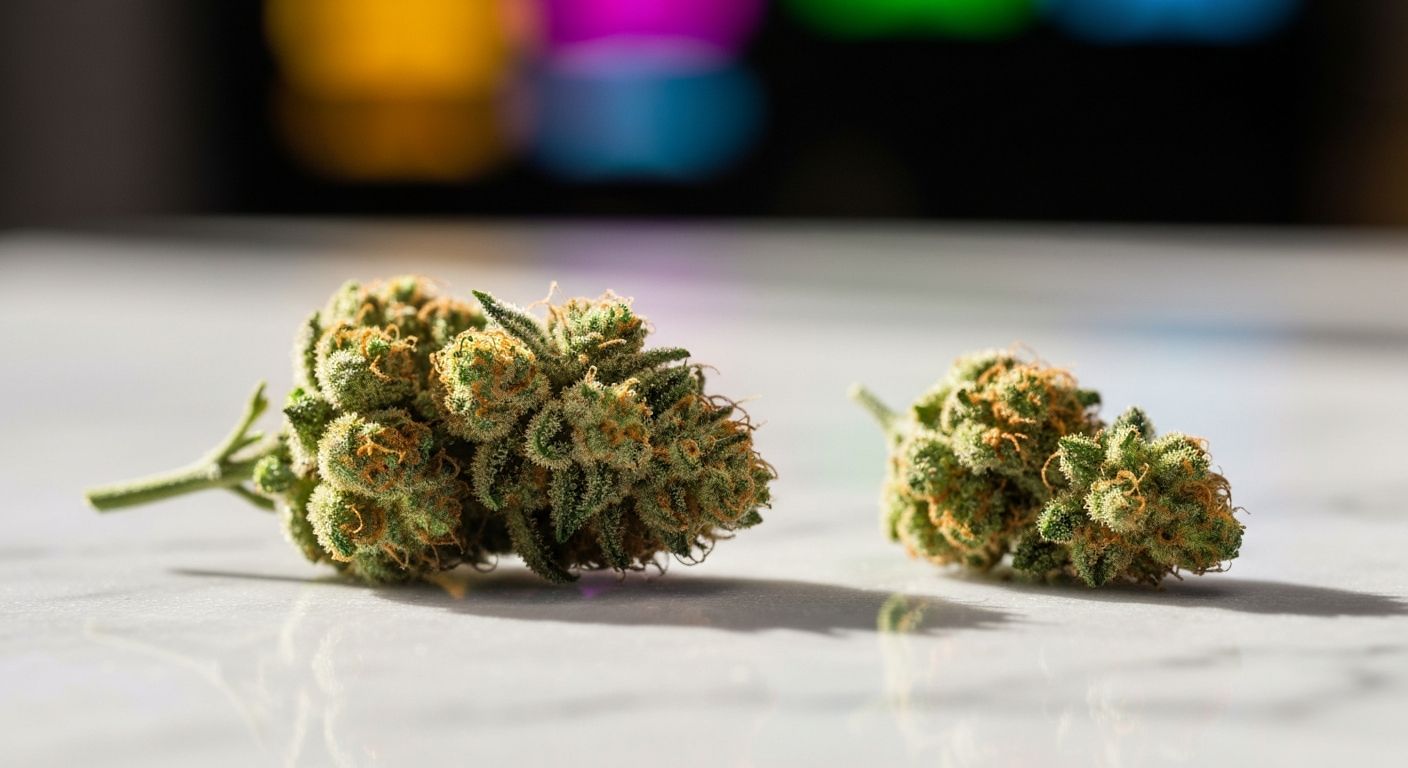
CBD (cannabidiol) is a naturally occurring compound found in the weed plant that does not get you high. It interacts with the body’s endocannabinoid system to promote balance without the intoxicating effects of THC. You can find CBD in flower, tinctures, edibles, and topicals at any licensed dispensary in New York, including all 12 Flowery locations.
How Is CBD Different from THC?
Both CBD and THC come from the same weed plant, but they land very differently in your body. THC binds directly to CB1 receptors in the brain, producing the euphoric high that most people associate with weed. CBD takes a subtler path – it modulates those same receptors without activating them fully, which is why it does not produce intoxication. Think of THC as the loud friend and CBD as the calm one who keeps the group grounded. Many products at The Flowery combine both compounds because they work better together than apart, a phenomenon researchers call the entourage effect. For value-conscious shoppers, understanding this distinction matters because it affects what you buy and what you spend.
| Factor |
CBD |
THC |
| Psychoactive? |
No |
Yes |
| Legal in NY? |
Yes (hemp and cannabis-derived) |
Yes (21+, licensed dispensaries) |
| Drug test risk |
Very low (check for trace THC) |
Yes |
| Common uses |
Relaxation, wellness, sleep support |
Euphoria, creativity, pain relief |
| Typical products |
Tinctures, topicals, capsules |
Flower, edibles, vapes, concentrates |
What Does CBD Actually Do in the Body?
Your body runs an endocannabinoid system (ECS) whether you have ever touched pot or not. The ECS regulates sleep, mood, appetite, inflammation, and pain response through receptors scattered across your brain, gut, and immune system. CBD influences this system by slowing the breakdown of your body’s own endocannabinoids, essentially helping your natural chemistry work more efficiently. Research published in journals like The Permanente Journal and Neurotherapeutics suggests CBD may support anxiety reduction, sleep quality, and inflammation management. What CBD does not do is cure anything – anyone selling CBD as a miracle fix is selling you a story. The compound shows genuine promise in specific areas, but it is a tool, not a treatment plan.
Key Takeaway: CBD supports your body’s existing regulatory systems rather than overriding them. That is why effects feel subtle – it is not about getting high, it is about finding balance.
What CBD Products Can You Buy in New York?
New York’s adult-use weed program licenses dispensaries to sell both THC-dominant and CBD-rich products. At The Flowery, CBD shows up across multiple categories:
- Tinctures – Sublingual drops with measured dosing. Tinctures are popular with value-conscious regulars because precise dosing means zero waste.
- Flower – High-CBD strains with low THC content. Great for people who enjoy smoking but want clear-headed effects.
- Edibles – Gummies and chocolates with CBD-forward ratios (like 10:1 CBD to THC or pure CBD).
- Topicals – Creams and balms applied directly to skin. They never enter the bloodstream, so there is zero psychoactive effect.
- Vaporizers – CBD vape cartridges for fast-acting effects without combustion.
Each format hits at a different speed and lasts a different duration, which matters when you are budgeting both money and time.
Is CBD Legal in New York?
Fully legal. New York legalized adult-use weed in March 2021 through the Marijuana Regulation and Taxation Act (MRTA). CBD derived from hemp (less than 0.3% THC) was already federally legal under the 2018 Farm Bill, and pot-derived CBD is legal at licensed dispensaries for anyone 21 and older. The key distinction is where you buy it. Licensed shops like The Flowery sell lab-tested, properly labeled products with verified CBD content. That gas station CBD gummy with no lab results and a cartoon character on the label? That is a gamble. New York’s Office of Cannabis Management requires every product sold at licensed dispensaries to carry a Certificate of Analysis showing exact cannabinoid content, meaning you know precisely what you are paying for.
How Do You Figure Out the Right CBD Dose?
Start low, go slow – this advice sounds cliche because it works. Most people begin with 10-25mg of CBD per day and adjust from there. Tinctures make dose titration easiest because you can increase or decrease by a single drop. Edibles come in fixed doses (typically 5mg or 10mg per piece), which simplifies tracking but limits flexibility.
Dosing Checklist:
– [ ] Start at 10mg for your first three days
– [ ] Keep a simple log – time, dose, how you felt two hours later
– [ ] Increase by 5mg increments if you are not noticing effects
– [ ] Give each new dose level at least three days before adjusting
– [ ] Talk to a budtender at The Flowery if you need guidance on product formats or ratios
– [ ] Watch for interactions if you take prescription medications – CBD can affect how the liver metabolizes certain drugs
Body weight, metabolism, and individual ECS sensitivity all play roles. A 130-pound person and a 220-pound person are unlikely to land on the same dose. Patience pays off here – rushing to a high dose wastes product and money.
Will CBD Show Up on a Drug Test?
Most standard drug tests screen for THC metabolites, not CBD. However, full-spectrum CBD products contain trace amounts of THC (legally up to 0.3% in hemp-derived products, and potentially more in weed products from a dispensary). Those trace amounts can accumulate with heavy daily use and trigger a positive result. If drug testing is a concern, look for broad-spectrum or CBD isolate products that have been stripped of THC. Check the Certificate of Analysis on the packaging – it lists exact THC content down to the decimal. The Flowery’s staff can point you toward products with verified zero or near-zero THC levels so you are not guessing. According to a Mayo Clinic overview, being informed about what you consume is the single best way to avoid surprises.
| Product Type |
THC Content |
Drug Test Risk |
| CBD isolate |
0% THC |
Negligible |
| Broad-spectrum CBD |
Trace, below detection |
Very low |
| Full-spectrum CBD |
Up to 0.3% (hemp) or higher |
Moderate with heavy use |
| CBD:THC ratio products |
Varies (check label) |
Depends on ratio |
Frequently Asked Questions
Can CBD get you high?
No. CBD does not produce intoxication. It may promote a sense of calm or ease tension, but there is no euphoria, no impairment, and no altered perception. Products with CBD and THC together will produce some high, proportional to the THC content.
How long does it take for CBD to work?
Timing depends on format. Inhaled CBD (vapes, flower) takes effect in minutes. Sublingual tinctures kick in within 15 to 30 minutes. Edibles and capsules need 45 minutes to two hours because they pass through the digestive system first.
Is CBD safe?
The World Health Organization has stated that CBD is generally well tolerated with a good safety profile. Side effects are uncommon and usually mild – drowsiness, dry mouth, or slight changes in appetite. CBD can interact with certain medications, so check with a doctor if you take prescription drugs.
How much does CBD cost at a dispensary?
Prices vary by format and concentration. Tinctures typically run $30 to $70 for a 30ml bottle. CBD gummies range from $20 to $45 per package. Per-milligram cost drops as you buy higher concentrations, which is where value-conscious regulars save the most.
Can you use CBD every day?
Many people use CBD daily as part of a wellness routine. There is no evidence of tolerance buildup with CBD the way THC tolerance develops. Consistent daily use may actually produce better results than occasional use because it keeps endocannabinoid levels steady.
What is the difference between hemp CBD and cannabis CBD?
The molecule is identical. The legal distinction is that hemp contains less than 0.3% THC, while cannabis can contain any amount. Cannabis-derived CBD products from licensed dispensaries tend to be higher quality because they face stricter testing requirements under New York’s regulatory framework.
Do CBD topicals actually work?
CBD topicals interact with cannabinoid receptors in the skin without entering the bloodstream. They are used for localized discomfort in specific areas. They will not help with sleep or general anxiety because they stay local, but many people report noticeable results for targeted application.
CBD is not complicated once you strip away the marketing hype. It is one compound in a plant full of useful compounds, and it works best when you match the right product to the right goal at the right dose.