Why NYC’s Legal Weed Market Boomed in 2026: The Numbers Behind the Growth
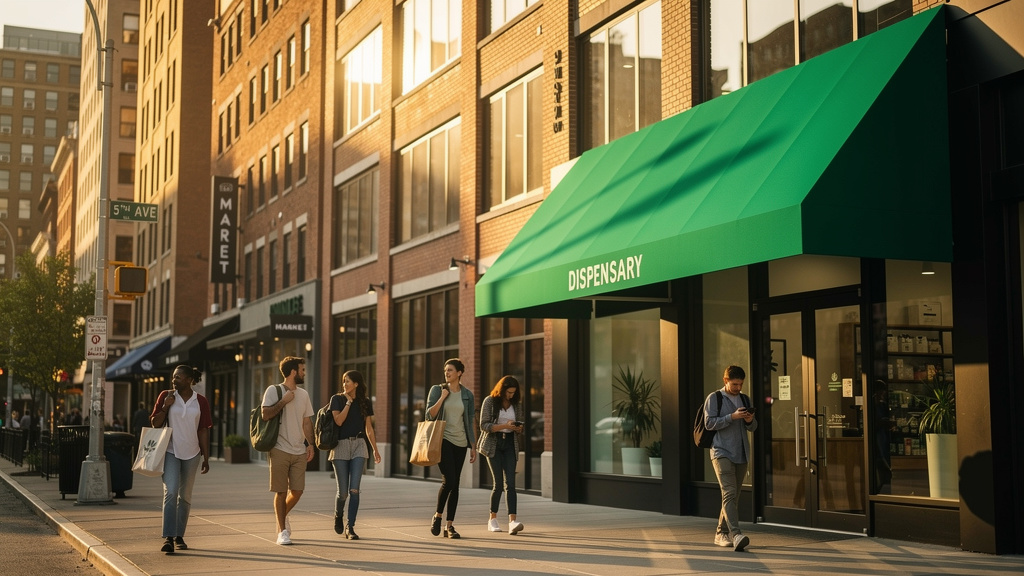
NYC’s legal weed market hit a turning point in 2026, with licensed dispensary sales overtaking the unlicensed gray market for the first time since legalization. The shift was driven by dispensary expansion across the five boroughs, intensified enforcement against unlicensed shops, improved consumer awareness about licensed-versus-unlicensed differences, and competitive pricing that closed the gap with gray-market alternatives. The Flowery is one of the largest legal chains operating in the state, with 12 locations covering NYC and the Hudson Valley.
The Big 2026 Numbers
While individual market reports vary, the overall trend lines for NYC’s 2026 legal weed market show:
- Licensed dispensary count in NYC grew from roughly 90 stores at the end of 2024 to well over 250 by early 2026
- Total licensed cannabis sales statewide crossed $1 billion in annualized rate in 2026
- Unlicensed shop count in NYC dropped significantly from 2024 peaks as enforcement scaled up
- Average dispensary basket size stabilized around $60 to $80 per visit
- Consumer awareness of the licensed vs unlicensed difference grew measurably
The specifics matter less than the direction: the legal market grew, the unlicensed market shrank, and the gap closed.
What Caused the 2026 Surge
Four main drivers reshaped the NYC weed market in 2026:
1. Dispensary expansion. Major operators like The Flowery, Curaleaf, Housing Works Cannabis Co., Gotham, and Travel Agency expanded their physical footprints. New stores opened across all five boroughs and surrounding counties.
2. Enforcement against unlicensed shops. State OCM and NYC Sheriff coordinated enforcement that closed or fined a significant portion of the city’s unlicensed cannabis operators throughout 2025 and 2026.
3. Pricing competition. Licensed prices, while still higher than gray market, dropped meaningfully as supply chains matured. The price gap that made unlicensed shops attractive narrowed.
4. Consumer awareness. Sustained education about lab testing, product safety, and counterfeit risks shifted buyer behavior. The “deal” of unlicensed product became less appealing as people understood what they were giving up.
Dispensary Geographic Distribution
By early 2026, NYC’s licensed dispensary distribution had evened out across the boroughs:
| Borough | Approximate Dispensary Count | Notable Anchors |
|---|---|---|
| Manhattan | 80+ | The Flowery (Soho, EV, WV, UWS, Chinatown), competitors |
| Brooklyn | 60+ | The Flowery Brooklyn, multiple independents |
| Queens | 40+ | The Flowery Queens, others |
| Bronx | 20+ | The Flowery Bronx, expanding |
| Staten Island | 10+ | Two Flowery stores, others |
Manhattan still leads on density, but the outer boroughs grew faster in 2026. Staten Island specifically went from minimal licensed presence to multiple operators in a year.
Why Unlicensed Shops Lost Ground
The unlicensed market did not disappear, but it shrank. Several factors:
Real enforcement risk. Earlier years of unlicensed operation faced limited enforcement. 2025-2026 changed that. Sheriff and OCM raids increased, fines became substantial, and some shops faced multi-year operating bans.
Counterfeit packaging crackdowns. Brands like Wyld and Kiva worked with enforcement on intellectual property claims against counterfeit operations.
Consumer education. New York invested in public awareness campaigns about the differences between licensed and unlicensed weed.
Supply chain disruptions. Some unlicensed shops’ supply networks were disrupted by enforcement against their upstream sources.
Quality complaints. Reports of contaminated unlicensed product (mold, pesticides, fake cartridge oil) circulated through consumer channels, eroding trust.
Product Trends in 2026
What NYC buyers picked up at licensed dispensaries in 2026 showed clear patterns:
Edibles remained the largest category by volume, with fast-acting nano-emulsified formulations gaining share.
Vapes were the second-largest category, with the licensed market having largely won the consumer trust battle after counterfeit vape concerns peaked in 2024.
Flower held steady, with premium indoor cultivars showing the strongest growth and budget tier showing slight decline.
Pre-rolls grew faster than flower, reflecting the convenience trend in NYC weed shopping.
Concentrates remained niche but with growing connoisseur interest.
Beverages were the fastest-growing format by percentage, though from a small base.
Price Trends
Licensed weed prices in NYC drifted modestly downward through 2026:
- Flower eighths dropped from $40 to $50 to a typical $35 to $45 range
- Pre-rolls stayed roughly stable at $12 to $20 per gram
- Edibles held in the $20 to $30 range for 10-piece packs
- Vapes dropped slightly from peak 2024 pricing of $50 to $70 down to $40 to $65
- Tinctures held in the $30 to $55 range
The downward pricing pressure was driven by supply chain maturation and competitive intensity, not by changes in state taxation.
The Loyalty Program Era
By 2026, most major NYC dispensaries operated loyalty programs. The Flowery’s program (along with competitors) became a meaningful retention mechanism in a market with growing consumer choice.
Average loyalty earn rates of 2 to 5% effectively gave regular customers a discount that closed even more of the licensed-vs-unlicensed price gap. For weekly buyers spending $80 per visit, loyalty earnings could exceed $200 per year.
Delivery Volume Growth
Same-day delivery became a more prominent part of the licensed market in 2026. The Flowery and competitors expanded delivery routes across NYC, with same-day arrival windows tightening from earlier days.
Delivery share of total sales grew from roughly 15% in 2024 to over 25% by early 2026 across the city. NYC’s transit-friendly geography and apartment density made delivery a natural fit.
Key Takeaway: NYC’s 2026 weed market crossover — licensed surpassing unlicensed — came from dispensary expansion, real enforcement, narrowing price gaps, and better consumer awareness. The trend points toward continued growth of the legal market with the unlicensed segment shrinking further.
Industry Concentration
NYC’s weed market in 2026 was simultaneously consolidating and fragmenting:
Consolidation among large operators. A few chains (including The Flowery, Curaleaf, and others) operated multi-store footprints that dominated convenience and brand recognition.
Fragmentation in cultivation. Many small and medium cultivators supplied product to dispensaries, preventing any single grower from dominating supply.
Social equity operators — under the state’s equity programs — gained ground but remained a smaller share of total market volume than originally projected.
What This Means for Buyers
For NYC weed buyers, 2026’s market changes had practical implications:
- More dispensary options — most NYC neighborhoods now had a licensed shop within walking distance
- Better selection — broader product range, more brands, deeper category coverage
- Slightly better prices — small but meaningful decreases in many categories
- Faster delivery — improved logistics narrowed the gap with food delivery speed
- Higher confidence in product — counterfeit risk dropped as the legal market grew
The 2026 market is the most accessible, varied, and consumer-friendly NYC weed market has ever been.
What’s Next
Looking forward from mid-2026:
More dispensary openings. Continued expansion is likely through the rest of 2026 and into 2027.
Continued enforcement. Unlicensed shops face ongoing pressure.
Product innovation. Beverages, fast-acting edibles, and novel formats are growing categories.
Interstate commerce questions. Federal-level changes could open interstate cannabis trade, which would reshape supply chains.
Pricing stabilization. The major price compression of 2025-2026 may be largely complete; future changes will be incremental.
Frequently Asked Questions
How big is the NYC legal weed market in dollars?
Estimates put NYC-only licensed cannabis sales in the hundreds of millions of dollars annually as of 2026, with statewide totals over $1 billion annualized.
How many licensed dispensaries are in NYC?
The count crossed 200 in early 2026 and has continued growing. Specific current totals are tracked by OCM at cannabis.ny.gov.
Is the unlicensed market gone?
No, not entirely. It has shrunk significantly through enforcement but still operates in pockets across the city.
Are weed prices going to keep dropping?
The major price compression of 2025-2026 may be largely complete. Future changes are expected to be incremental.
Which dispensary chain is biggest in NYC?
Several major chains compete for market share. The Flowery is among the largest with 12 locations spanning NYC and the Hudson Valley.
Are NYC’s tax rates higher than other states?
New York’s combined cannabis taxes (state excise + sales) add approximately 13% to retail prices. This is in the moderate range nationally — higher than some states, lower than others like Washington.
Will federal legalization change the NYC market?
Federal legalization would open interstate commerce, which could significantly reshape supply chains and pricing. Timeline remains uncertain.
How can I support the legal NYC weed market?
Buy at OCM-licensed dispensaries. Every legal purchase funds state tax revenue, supports equity programs, and reinforces the regulated supply chain.