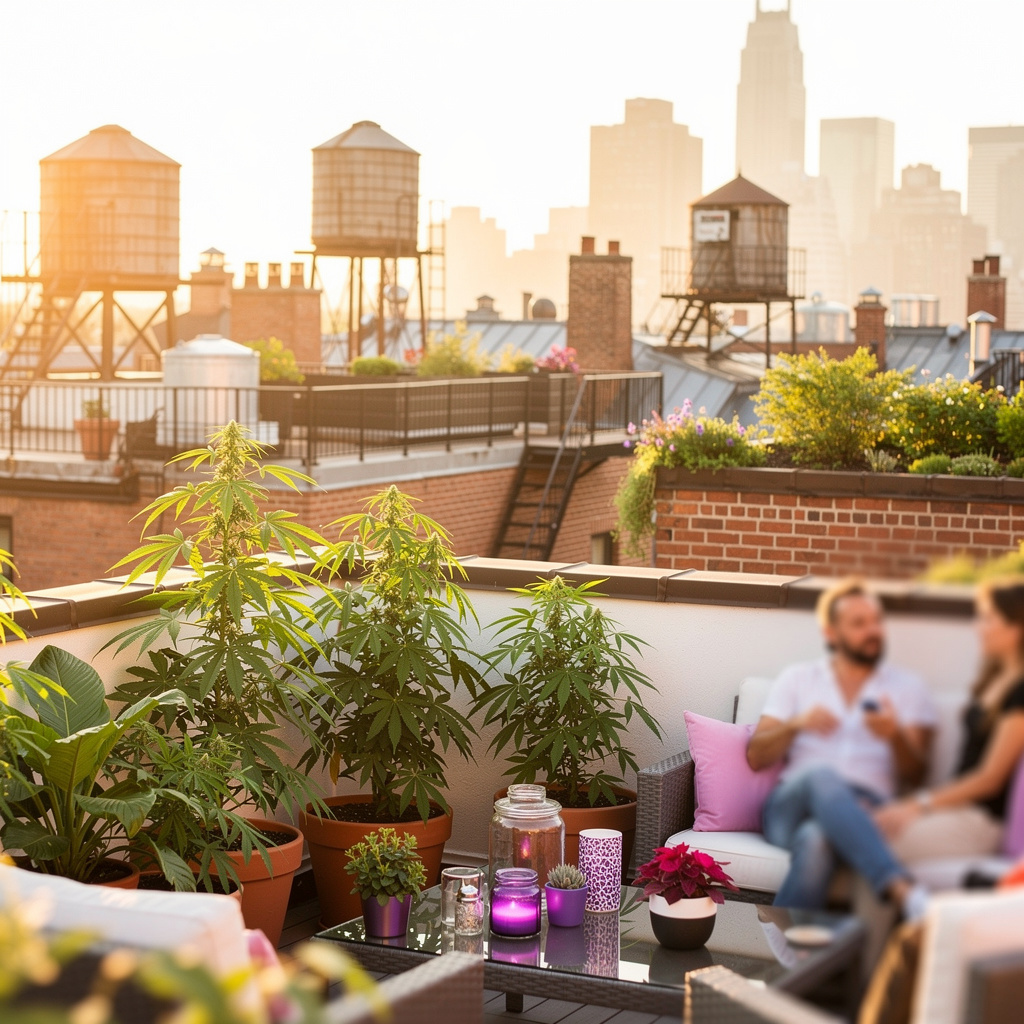
Weed culture in New York City isn’t clinical. It’s not about percentages on a lab report. It’s about hip-hop artists finding rhythm in the studio, painters discovering color intensity in a different state of mind, writers breaking through blocks, musicians finding new sonic dimensions. It’s Harlem, it’s Brooklyn, it’s the creative heartbeat of the city.
Most dispensaries miss this entirely. They’ll talk about THC levels and terpene profiles like robots. But a dispensary that truly gets the creative community? They understand that weed is a cultural tool, not just a consumer product. The Flowery exists because we’re embedded in NYC’s creative culture. Our staff across 12 neighborhoods – from Williamsburg to Harlem, from East Village to Forest Hills – aren’t just trained on cannabinoids. They’re part of the creative community, and they know how weed actually functions in artistic practice.
Pot and NYC Creative Culture: The Real History
Weed has been woven into NYC’s creative culture for decades, especially in hip-hop and music. Think about the influence: Nas, Snoop, Wu-Tang, A Tribe Called Quest – weed wasn’t incidental to their creative process. It was part of how they made music. That cultural resonance runs deep in New York.
Beyond hip-hop, weed shaped NYC’s visual art scene, poetry, theater, and experimental music. It’s part of how this city thinks about creative expression. When New York legalized pot in 2021, it wasn’t just a policy shift. It was acknowledgment that weed is part of the cultural fabric, not a fringe thing.
The creative community isn’t new to weed. But NYC dispensaries treating weed as strictly medical or recreational miss the cultural reality entirely. That’s where The Flowery comes in. We understand that the best budtender recommendations connect pot to how you actually create.
What It Means When a Budtender “Gets It”
There’s a massive difference between a budtender who’s read a training manual and one who’s genuinely connected to creative culture.
A budtender who gets it asks questions like: “What kind of creative work are you doing?” They listen to the answer and dig deeper. “Are you looking for focus or inspiration?” “Does your process need clarity or do you work better with looser associations?” They’re not pattern-matching against a script. They’re thinking about how weed affects your specific creative practice.
Research shows there’s a 64% performance gap between the best and worst budtenders – and that gap is largely about whether they’re curious and culturally attuned or just transactional. The best budtenders ask genuine questions. They listen. They actually think about what they’re recommending.
When a budtender is connected to creative communities, they also carry lived experience. They know what products musicians love for production sessions. They know which strains visual artists return to. They understand flow state not just as a concept but as something they’ve experienced themselves or heard about from dozens of artists they serve.
Finding Dispensaries That Are Actually Community Hubs
The Flowery’s 12 locations across NYC aren’t just retail spaces. They’re intended as neighborhood cultural anchors. In Williamsburg (where the Brooklyn creative scene is densest), in the East Village (historic heart of NYC counterculture), in Harlem (economic engine of the contemporary cannabis industry), and beyond – we’re part of the community, not just selling products in it.
A dispensary that’s a real community hub will:
- Know local artists and creative spaces. Staff can tell you about galleries, studios, music venues, and creative communities in the neighborhood.
- Stock products that reflect creative communities. Not just what’s “on-trend” but what the artists actually using those products say works best.
- Host actual conversations. You walk in, talk about your practice, and leave with personalized recommendations from someone who genuinely engaged.
- Show up in neighborhood spaces. Real cultural connection means dispensary staff show up at open mics, gallery openings, creative events – not as vendors but as participants.
Terpenes Mapped to Creative Disciplines
Most dispensaries talk about terpenes like scientists explaining compounds. Creative communities need to understand terpenes as tools for specific kinds of work.
Limonene (citrus, energetic) helps with sustained focus and mood elevation. Music producers love limonene-dominant strains for mixing sessions where clarity and ear-sharpness matter. Writers love it for drafting work where productivity and positive energy drive output.
Myrcene (earthy, introspective) promotes deep thinking and introspection. Visual artists gravitate toward myrcene for conceptual work and color perception. Writers love it for slow, meditative drafting and exploring themes deeply. Performance artists use it to sink into character work.
Linalool (floral, calming) reduces anxiety while maintaining engagement. This is gold for creatives who get stuck in perfectionism – you can create without the mental resistance. Musicians use it for practices where listening and refinement matter.
Caryophyllene (spicy, grounding) offers anti-inflammatory effects and mood stability. Good for longer creative sessions where physical comfort matters. Also useful for managing anxiety in high-stress creative work like performance.
A budtender worth their salt at The Flowery will help you match terpene profiles to your actual creative discipline, not just rattle off scientific names.
The Flowery’s 12 Neighborhood Locations as Creative Hubs
We’re intentional about where we operate:
Williamsburg & East Village: Epicenter of contemporary NYC art, music, and nightlife. Dense creative community, high turnover of artists and musicians.
Upper West Side & West Village: Established arts institutions, theater, classical music, literary culture.
Soho & Chinatown: Historic gallery districts, experimental art spaces, underground music culture.
Harlem & Bronx: Renaissance of legal weed, hip-hop heartland, vibrant street art, music production studios.
Forest Hills & Flushing, Queens: Growing creative scenes outside Manhattan, diverse music and art communities.
Newburgh, Haverstraw, Staten Island: Expanding upstate creative communities and commuter access.
Each location serves its neighborhood’s actual creative community. Our staff understand the specific culture of their area. That’s not performative. It’s embedded in hiring, training, and operations.
Staff Who Come from Creative Communities
The best budtenders we employ come from creative backgrounds. Musicians who understand what strains help with production. Visual artists who know how weed affects perception. Writers who’ve experienced pot’s role in creative flow. People who’ve lived this culture, not just read about it.
That’s not universal across dispensaries. It’s a deliberate choice. When you hire for cultural knowledge and lived experience alongside product knowledge, you get fundamentally different conversations.
This also means supporting Black-owned and community-rooted cannabis businesses. Harlem’s cannabis industry is a concrete example – Black entrepreneurs and community members reclaiming an industry that criminalized them for decades. When dispensary staff understand that history, it changes how they talk about weed culture.
Questions That Reveal a Budtender’s Real Knowledge
Test a budtender’s actual engagement with creative communities:
“I’m a [musician/visual artist/writer]. What products help me find flow without zoning out?” Listen for specific thinking, not canned responses.
“What strains do other artists you work with gravitate toward?” A good budtender will reference actual customer feedback tied to creative outcomes.
“How would you describe what [strain] feels like, not just what it tests at?” Sensory and experiential description beats lab talk every time.
“Which terpenes help with focus without anxiety?” They should connect terpenes to emotional/cognitive states, not just list them.
“Are there local or community-owned brands you recommend?” Good budtenders support local and Black-owned producers they believe in.
If answers are vague, transactional, or purely clinical, they’re not connected to creative culture.
Red Flags: Corporate vs. Authentic
Some dispensaries are corporate chains dressed up as community spaces. Here’s how to spot the difference:
Red flags for corporate retail:
- Staff rotates constantly; no one has deep neighborhood knowledge
- Product recommendations are price-driven or focused on highest-THC
- Staff hasn’t visited neighborhood galleries, studios, or music venues
- Recommendations feel generic: “This one’s popular” or “Try our sale items”
- No discussion of local or Black-owned producers
Green flags for authentic culture:
- Staff have been in the location for months or years
- They know the neighborhood creative scene by name
- Product curation reflects community preferences, not corporate directives
- They can discuss why they recommend something beyond potency
- They actively support local and community-rooted businesses
The Flowery’s commitment is to green flags. That’s not natural – it requires hiring decisions, training, and operational choices that prioritize culture over pure profit margin.
FAQ
What if I’m not sure how weed affects my specific creative work?
A good budtender will ask questions to help you figure it out. Start with what you do, what you’re trying to achieve, and whether you’ve used weed while creating before. Go from there.
Are there dispensaries specifically for musicians, visual artists, or writers?
Not officially, but The Flowery locations in Williamsburg, East Village, and other creative hubs are embedded in those communities. Call ahead and ask to talk with someone familiar with your discipline.
Should I only buy from Black-owned dispensaries?
There’s value in supporting community-rooted businesses as part of reparative economics. The Flowery works with Black-owned growers and producers. Ask staff about sourcing if that matters to you.
How do I know if a budtender is actually creative or just pretending?
Listen to the depth of engagement. Can they discuss how pot affects different creative states? Do they reference specific products and why? Or are they generic? Real knowledge shows in specificity.
What if my creative community has specific strains we all love?
Build a relationship with staff who can source those consistently. A good budtender will remember and hunt down products that work for you.
Can I talk to budtenders about weed and creative process confidentially?
Absolutely. Conversations with budtenders are not reported to anyone. It’s between you and them. That privacy is part of what makes real relationships possible.
What if I want to support local producers but don’t know what they’ve made?
Ask The Flowery staff. They can connect you with local and community-rooted brands. This is something we take seriously.
Does liking The Flowery mean I shouldn’t explore other dispensaries?
Not at all. Shopping around helps you understand the market. But we think you’ll find something different in how our staff engage with creative culture.
How often do staff recommendations change?
Good budtenders update recommendations as new products arrive and as they learn more about community preferences. The market moves fast. Real engagement means staying current.
Is it okay to ask a budtender for specific creative recommendations?
Yes, please. That’s exactly what you should ask. “I need focus for mixing music” or “I’m looking for something that helps visual perception” or “I want flow for writing” – these are perfect questions.
Weed culture in New York runs deeper than marketing. It’s built on relationships, community, and understanding weed as a legitimate tool for creative work. When you walk into The Flowery, you’re not just buying a product. You’re tapping into a budtender who genuinely understands how pot functions in your creative practice. That makes all the difference between a transactional retail experience and actual cultural engagement.