The best pot for pain relief without a heavy high combines moderate THC (5-15%) with higher CBD ratios and terpenes like beta-caryophyllene, myrcene, and linalool that have demonstrated anti-inflammatory and analgesic properties. At The Flowery, ask your budtender for 1:1 CBD:THC products, low-dose edibles with body-focused effects, or topicals that deliver localized relief without any psychoactive effect at all.
The Pain Relief Sweet Spot
Here’s what most people looking for pain relief from pot actually want: enough cannabinoid activity to reduce discomfort and inflammation, without being incapacitated, foggy, or unable to function. This isn’t about getting stoned – it’s about feeling better while still being yourself.
The key insight is that THC isn’t the only pain-relevant compound in cannabis. CBD contributes anti-inflammatory effects. Specific terpenes (aromatic compounds) have their own analgesic properties. And the interaction between these compounds – what researchers call the entourage effect – often produces better pain outcomes than isolated THC alone.
This means the highest-THC product on the shelf is actually the wrong choice for functional pain relief. You want balanced, moderate, and terpene-rich rather than maximum potency.
What to Ask Your Budtender at The Flowery
Walk into any Flowery location and say something like:
“I’m dealing with [chronic pain/joint pain/back pain/inflammation] and I want relief without getting too high. What do you recommend?”
A good budtender – and The Flowery’s staff are trained for exactly this conversation – will ask you:
1. What type of pain? (sharp, dull, inflammatory, nerve)
2. When does it bother you? (morning, evening, constant)
3. How do you want to consume? (smoke, edible, topical, tincture)
4. What’s your THC tolerance? (none, low, moderate, high)
Based on those answers, they’ll narrow the selection to products that actually fit your needs rather than defaulting to the highest-potency option.
Product Categories for Pain Relief
CBD:THC Balanced Products (Recommended Starting Point)
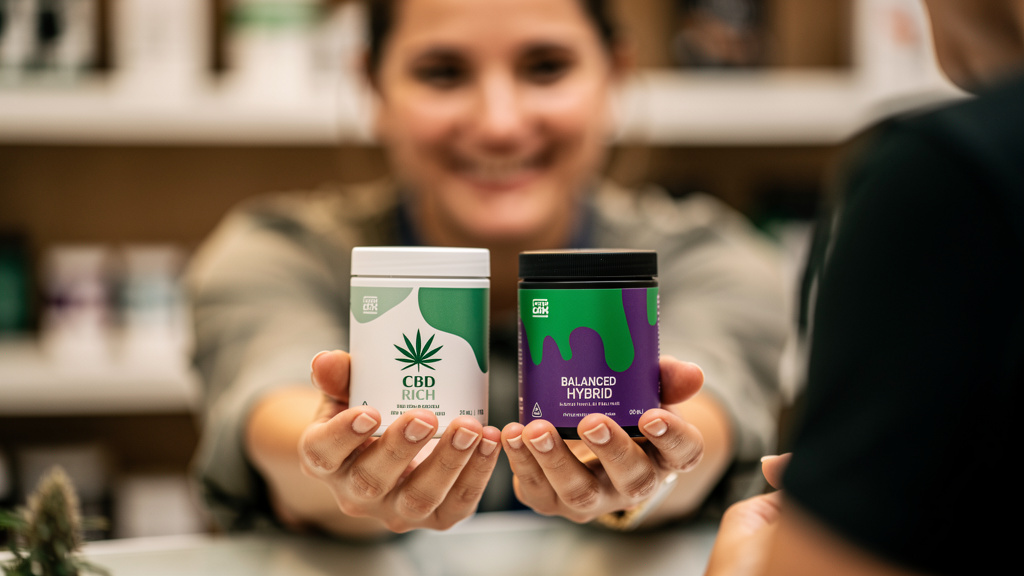
Products with a 1:1 or 2:1 CBD:THC ratio deliver pain relief with significantly reduced psychoactive intensity. The CBD modulates the THC high, keeping you functional and clear-headed while the combination addresses pain from multiple pathways.
| Ratio |
THC Level |
High Intensity |
Pain Relief |
Best For |
| 2:1 CBD:THC |
Low |
Minimal |
Moderate |
First-timers, daytime use |
| 1:1 CBD:THC |
Moderate |
Mild |
Good |
Regular use, moderate pain |
| 1:2 CBD:THC |
Higher |
Noticeable |
Strong |
Evening use, severe pain |
Available in tinctures, edibles, vape cartridges, and flower formats at The Flowery. Tinctures offer the most precise dosing for finding your minimum effective dose.
Topicals (Zero High)
Cannabis topicals – creams, balms, patches, and salves – deliver cannabinoids through the skin directly to the affected area. They do not enter your bloodstream in significant amounts, which means zero psychoactive effect. You cannot get high from a topical.
Best for: Localized joint pain, muscle soreness, arthritis flares, sports recovery, specific injury sites.
How to use: Apply directly to the painful area. Effects typically begin within 15-30 minutes and last 2-4 hours. Reapply as needed throughout the day.
Low-Dose Edibles
Gummies and other edibles at 2.5-5mg THC provide gentle, sustained body relief that lasts 4-6 hours. For chronic pain that persists throughout the day, a morning low-dose edible can provide a baseline of comfort without impairment.
At these micro-doses, most people report mild relaxation and reduced pain awareness without cognitive impairment. You can work, drive (after you’ve established your response at these doses over multiple sessions at home first), and function normally.
Terpene-Rich Flower
Specific terpenes found in cannabis have pain-relevant properties independent of THC:
| Terpene |
Found In |
Pain Property |
Also Smells Like |
| Beta-caryophyllene |
Black pepper, cloves |
Anti-inflammatory, binds CB2 receptors |
Spicy, woody |
| Myrcene |
Mangoes, hops, thyme |
Muscle relaxant, sedating |
Earthy, musky |
| Linalool |
Lavender |
Analgesic, anti-anxiety |
Floral |
| Limonene |
Citrus peel |
Mood elevation, anti-inflammatory |
Citrus |
| Humulene |
Hops, basil |
Anti-inflammatory |
Herbal |
When shopping for flower, look for strains high in caryophyllene and myrcene if pain relief is the goal. The budtenders at The Flowery can point you toward current inventory that matches these terpene profiles.
Dosing Strategy: Start Low, Increase Slowly
For pain relief without intoxication, the dosing approach matters as much as the product choice:
Week 1: Start at 2.5mg THC (or equivalent in 1:1 ratio product). Note pain levels throughout the day. One dose in the evening initially.
Week 2: If insufficient, increase to 5mg. Or add a second dose at a different time of day. Note any cognitive effects.
Week 3: Adjust based on what you’ve learned. Some people find 5mg twice daily works perfectly. Others need 10mg at night and nothing during the day.
Ongoing: Once you find your effective dose, stick with it. Tolerance builds slowly at low doses, so your effective amount should remain stable for weeks to months before needing adjustment.
The goal is finding the minimum effective dose – enough to meaningfully reduce pain, low enough that you don’t notice cognitive effects. This sweet spot exists for almost everyone; it just takes patience to find.
When to Use Which Format
| Situation |
Best Format |
Why |
| Morning stiffness |
Tincture under tongue |
Fast 15-min onset, precise dose |
| All-day chronic pain |
Low-dose edible with breakfast |
Sustained 4-6 hour coverage |
| Localized joint pain |
Topical cream/balm |
Direct application, zero high |
| Evening flare-up |
Balanced vape (1-2 puffs) |
Immediate relief, easy to dose |
| Before physical therapy |
Topical + low-dose edible |
Targeted + systemic |
| Night pain affecting sleep |
Higher-dose edible (indica) |
Longer duration through sleep |
Important Health Notes
Cannabis for pain relief works alongside – not instead of – your existing healthcare relationships. If you’re managing chronic pain:
– Tell your doctor you’re exploring cannabis (no legal consequence, improves care coordination)
– Watch for interactions with existing medications (especially blood thinners, sedatives)
– Don’t abruptly stop other pain management without medical guidance
– Track your results: pain diary with dose, product, and pain level helps optimize
The Flowery’s budtenders provide product guidance but are not medical professionals. For questions about drug interactions or medical conditions, consult your physician. For questions about which product format and strain might fit your needs, the budtenders are your best resource.
Frequently Asked Questions
Can I use weed for pain relief and still work normally?
Yes, with proper product selection and dosing. CBD:THC balanced products at low doses (2.5-5mg THC) and topicals provide relief without significant cognitive impairment for most people. Establish your response at home before relying on it during work hours.
Is CBD alone enough for pain or do I need THC?
CBD alone provides anti-inflammatory benefits, but research suggests the combination of CBD and THC (even small amounts) is more effective for pain than either alone. Start with higher CBD ratios and add minimal THC if CBD alone is insufficient.
Will I build tolerance and need more over time?
At low functional doses, tolerance builds much more slowly than at recreational doses. Many pain patients maintain the same effective dose for months. If tolerance develops, a short break (2-3 days) typically resets sensitivity.
What about pain patches?
Transdermal patches deliver cannabinoids steadily over 8-12 hours. They provide consistent blood levels without peaks and valleys. Ask at The Flowery about availability – patches are one of the most convenient formats for chronic pain.
Can I combine cannabis with ibuprofen or acetaminophen?
Generally considered safe for occasional combination, as cannabis and standard OTC pain relievers work through different mechanisms. However, daily combined use should be discussed with your doctor, particularly regarding liver stress from acetaminophen.