Is Weed Legal in New York? A Complete Guide for 2026
Yes, recreational weed is legal in New York State for adults 21 and older. It has been since March 2021 when the Marijuana Regulation and Taxation Act…
04/16/2026|admin
New York’s 2026 weed laws allow adults 21 and older to possess up to three ounces of flower and 24 grams of concentrates, purchase from any licensed dispensary without residency requirements, and consume in private spaces and most outdoor areas where cigarette smoking is permitted. For connoisseurs who buy frequently and in volume, knowing the specific limits, the gray zones, and the enforcement reality separates a relaxed experience from an avoidable headache.
New York’s Marijuana Regulation and Taxation Act (MRTA) set some of the most permissive possession limits in any legal state. Three ounces of flower or 24 grams of concentrate is what you can carry on your person. At home, you can store up to five pounds. That’s not a misprint – five pounds of personal-use weed in your residence is legal under state law.
For connoisseurs who maintain a rotation of strains, store cured flower in humidity-controlled containers, and keep multiple concentrate formats on hand, these limits are practically a non-issue. The three-ounce carry limit is the one to watch. If you’re heading to a friend’s house with your weekend selection from The Flowery, weigh it before you leave. Three ounces is roughly 85 grams – more than most people carry in a month, but a connoisseur with a full rotation could theoretically push close.
| Possession Type | Legal Limit | Penalty If Exceeded |
|---|---|---|
| On-person flower | 3 oz (85g) | Misdemeanor, fine + up to 3 months |
| On-person concentrates | 24g | Misdemeanor, fine + up to 3 months |
| At-home flower | 5 lbs | N/A within limit |
| At-home concentrates | Proportional limit | Varies by amount |
| Plants (home grow) | 6 per household (3 mature) | Civil penalty |
As of 2026, New York permits adults to grow up to six plants at home – three mature and three immature – with a household cap of 12 plants if multiple adults reside there. Connoisseurs who want to cultivate specific genetics can finally do it legally.
The catch: your landlord can prohibit growing in rental properties, and any cultivation must be in a secure location not visible or accessible to anyone under 21. Growing in a shared yard or on a fire escape won’t cut it. You also can’t sell any of what you grow – it’s strictly personal use. The Office of Cannabis Management hasn’t approved home-grow retail seed sales through dispensaries yet, so seeds currently come through federal loopholes or gifting.
For connoisseurs interested in growing, The Flowery’s budtenders at the Brooklyn dispensary can talk through how commercial cultivars compare to what you might grow at home. Understanding the gap helps you appreciate what professional-grade operations deliver in terms of flower quality and consistency.
This is the compliance area that catches experienced smokers off guard the most. New York treats pot smoke identically to cigarette smoke for public health purposes. The Smoke-Free Air Act applies to weed everywhere it applies to tobacco.
Legal consumption spots:
– Private residences (unless lease prohibits)
– Private outdoor spaces (balconies, yards, rooftops)
– Licensed cannabis consumption lounges
– Most sidewalks and open outdoor areas
– Parks (excluding playgrounds, pools, athletic fields)
Illegal consumption spots:
– Inside bars, restaurants, and clubs
– Workplaces
– Schools, hospitals, and government buildings
– Public transit and transit infrastructure
– Federal property
– Inside vehicles (even parked, even as passenger)
Connoisseurs who prefer smoking whole flower over edibles need to plan where they’ll consume. The consumption lounge scene in NYC is growing but still limited. For maximum flexibility, vaporizers and edibles solve the location problem entirely.
New York’s enforcement against unlicensed weed sellers escalated sharply in 2025 and into 2026. The Office of Cannabis Management has conducted hundreds of enforcement actions, padlocking storefronts and seizing product. For connoisseurs, the distinction between licensed and unlicensed product goes beyond legality into quality assurance.
Every product sold at a licensed dispensary like The Flowery undergoes third-party lab testing for THC/CBD content, terpene profiles, pesticide residues, heavy metals, microbial contamination, and residual solvents. That COA (certificate of analysis) is your guarantee that the live resin cartridge you’re about to hit contains exactly what the label says.
Unlicensed product offers no such guarantee. Counterfeit packaging is sophisticated enough to fool casual buyers, and untested concentrates represent a genuine health risk. The connoisseur’s move is obvious: buy from the OCM’s licensed dispensary list and don’t gamble with your lungs or your palate.
Adults can gift up to three ounces of weed to other adults without compensation. That’s straightforward. Where connoisseurs get into trouble is the “without compensation” part. You cannot sell weed, trade it for goods or services, or use it as an incentive attached to a purchase. Those “buy a sticker, get free weed” operations that proliferated in 2022-2023 have been systematically shut down.
Genuine gifting – bringing an eighth to a dinner party, sharing a pre-roll with a friend, leaving some pot at someone’s apartment – is perfectly legal. Just keep it under three ounces per transaction and make sure the recipient is 21 or older. No one’s checking, but if the exchange involves money or barter, it crosses into unlicensed distribution territory.
New York has no per se THC limit for driving – there’s no blood-THC equivalent of the 0.08 BAC standard. Instead, impairment is assessed by Drug Recognition Experts (DREs) and field sobriety evaluations. This is actually harder for drivers to navigate than a bright-line number, because the determination is partly subjective.
For connoisseurs who consume daily, residual THC in your system doesn’t automatically make you impaired. But it does mean that if you’re pulled over for an unrelated traffic violation and the officer smells pot or observes bloodshot eyes, you could be subjected to a DRE evaluation. The safest approach: never drive within four hours of smoking and never within eight hours of consuming edibles. NYC’s transit infrastructure makes driving unnecessary for most residents anyway.
| Substance | Legal Driving Threshold | Detection Method |
|---|---|---|
| Alcohol | 0.08 BAC | Breathalyzer |
| Weed | No numeric threshold | Officer observation + DRE |
| Combined alcohol + weed | Elevated scrutiny | Both methods |
The Flowery’s delivery service eliminates the need to drive to a dispensary entirely. Order from home and skip the car altogether.
New York taxes adult-use weed at multiple levels: a wholesale distributor tax based on THC content (currently $0.005 per milligram for flower, $0.008 for concentrates, and $0.03 for edibles), plus state and local retail sales tax. The effective tax rate on a dispensary purchase runs around 20-25% depending on the product and locality.
For connoisseurs buying premium flower and concentrates regularly, that tax adds up. An eighth priced at $50 pre-tax ends up closer to $62 at the register. The loyalty program at The Flowery offsets some of that sting – points accrue on every purchase and convert to real discounts that make the after-tax price more palatable.
Worth noting: New York’s tax rate is lower than California’s combined rate and roughly comparable to Colorado’s. The state deliberately set rates below the black-market premium threshold, reasoning that reasonable taxes pull more buyers into the legal market.
New York’s Labor Law Section 201-D prohibits employers from discriminating against employees for legal off-duty weed use. Your boss can’t fire you for smoking pot at home on Saturday night. However, federal employees, safety-sensitive positions (heavy machinery operators, CDL holders, healthcare workers under certain conditions), and roles governed by federal contracts are exempt.
Drug testing for weed is effectively banned for most private-sector employers in pre-employment screening. Random testing during employment is restricted to safety-sensitive roles. This protection matters for connoisseurs who hold professional jobs – your after-hours pot use is legally protected in most scenarios, and Department of Labor guidance confirms the scope of these protections.
Can I cross state lines with weed bought in NYC?
No. Transporting weed across state lines is a federal offense regardless of legality in both states. Driving from NYC to New Jersey with a bag of pot violates federal law, even though both states have legal markets. Consume what you buy within New York state borders only.
Are there limits on how often I can buy weed at a dispensary?
No purchase frequency limit exists under New York law. You can visit a dispensary daily and buy up to three ounces of flower each time. The transaction limit applies per purchase, not per day or per week. Connoisseurs who rotate strains or stock up on concentrates are free to buy as often as they like.
Can I consume weed on my apartment balcony legally?
Yes, unless your lease includes a no-smoking clause that covers balconies. New York law permits consumption in private outdoor spaces. Balconies are generally considered part of your private residence for consumption purposes. If neighbors complain, the resolution typically falls under building policy rather than criminal law.
What happens if police smell weed on me?
Under New York law, the smell of pot alone is not probable cause for a search. Officers cannot stop you, detain you, or search your belongings solely because they smell weed. This was codified in the MRTA specifically to prevent pretextual stops. If you’re carrying a legal amount, the smell is irrelevant.
Do edibles have different legal limits than flower?
Edible limits are calculated by THC content rather than weight. The practical effect is that a standard pack of gummies from a licensed dispensary always falls within legal limits. You’d need to carry an absurd quantity of legal edibles to exceed the concentrate gram threshold. Standard purchases never approach the ceiling.
Can I bring weed into a concert venue or sports arena?
Most venues prohibit weed on their premises regardless of state law, as a condition of entry. Madison Square Garden, Barclays Center, and most concert halls treat it like alcohol – you can’t bring your own. Some outdoor festivals and events have started permitting consumption in designated areas, but check each venue’s policy individually.
Is there a legal age to be around weed in NYC?
Anyone under 21 cannot purchase, possess, or consume weed. However, being in the presence of legal adult-use consumption is not criminalized for minors. An 18-year-old at a house party where adults are smoking pot isn’t breaking any law by being there – they just can’t partake. Dispensaries require ID verification at the door.
Yes, recreational weed is legal in New York State for adults 21 and older. It has been since March 2021 when the Marijuana Regulation and Taxation Act…

How Young Adults Can Maximize Regulatory Compliance During First Legal Cannabis Purchases New York’s cannabis regulations are straightforward for youn…
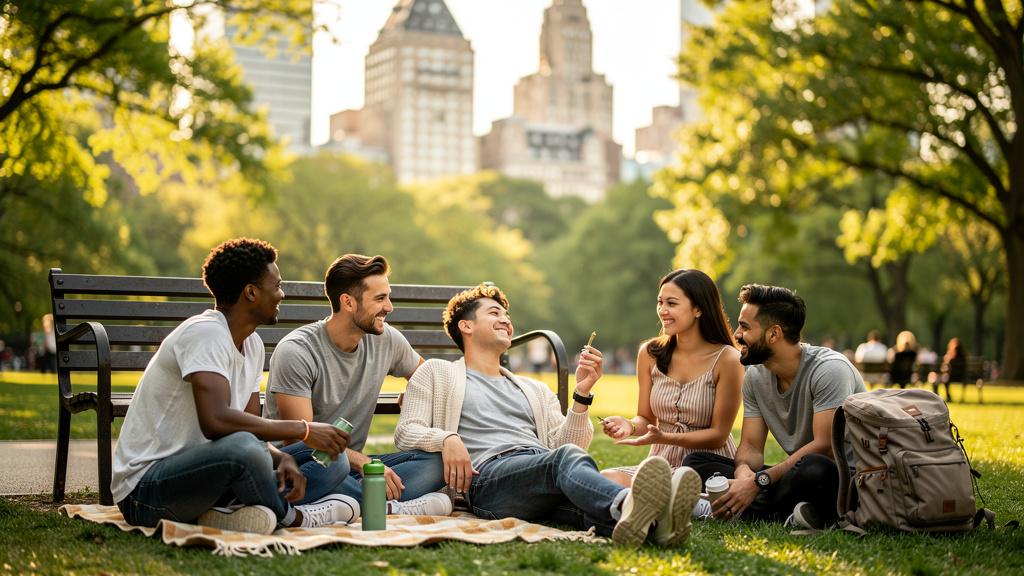
Yes, it is legal to smoke weed in most public outdoor spaces in New York where cigarette smoking is allowed. You can smoke on sidewalks, in most park …